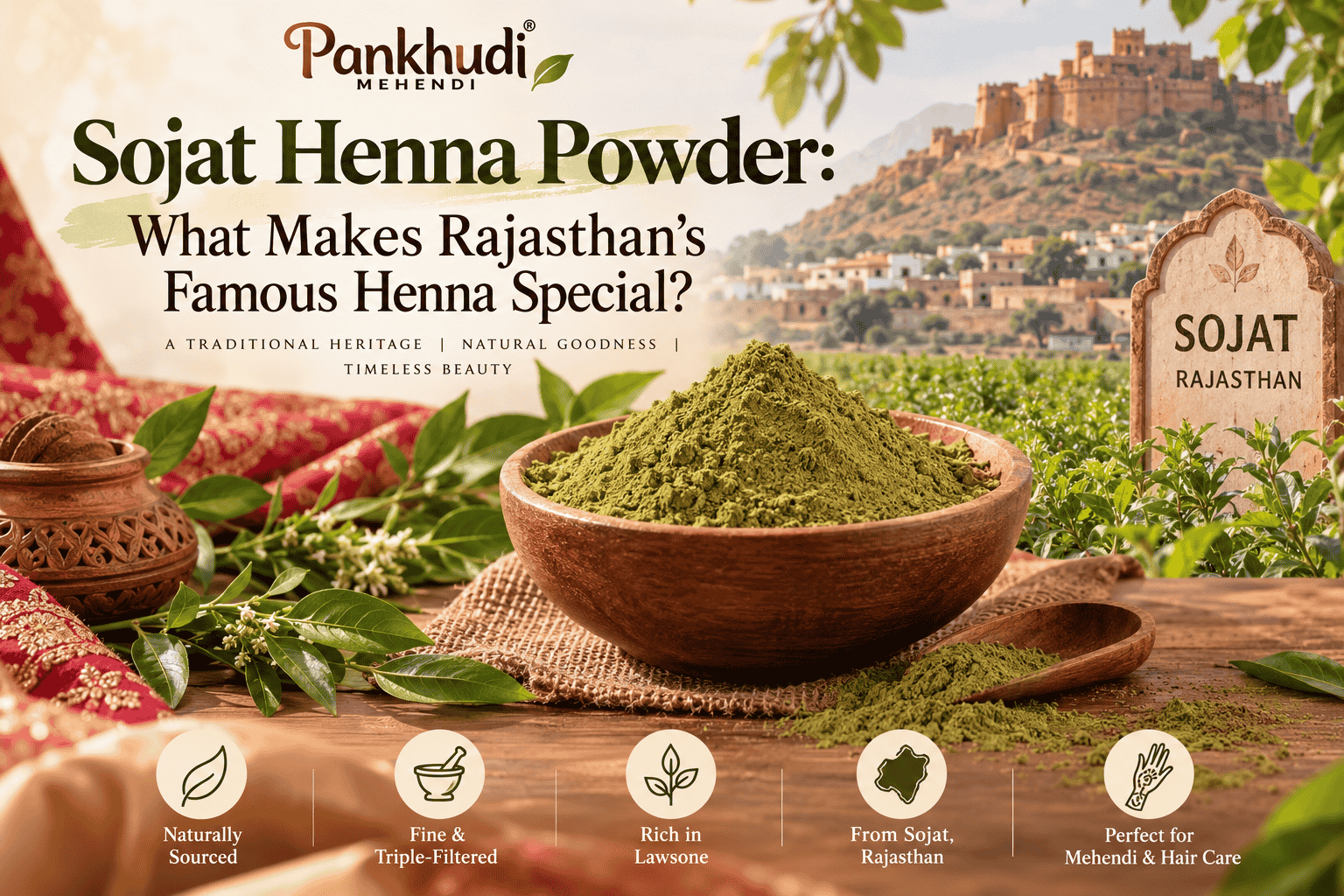
Sojat Henna Powder: What Makes Rajasthan’s Famous Henna Special?
Discover the natural beauty of Sojat henna powder, a traditional favourite from Rajasthan known for its rich heritage, fine texture, and place in Indian beauty rituals.
Henna has been a cherished part of Indian beauty traditions for generations. From applying mehendi during weddings and festivals to preparing natural hair masks at home, henna continues to hold a special place in everyday beauty routines. Among India’s well-known henna-producing regions, Sojat in Rajasthan has earned recognition for its henna cultivation and traditional processing.
But what makes Sojat henna powder special? Is it the region’s agricultural heritage, the quality of its leaves, or the care taken during processing? Let’s explore what makes Sojat henna a popular choice for mehendi lovers, beauty enthusiasts, and professional artists.
What Is Sojat Henna Powder?
Sojat henna powder is made from the dried leaves of the henna plant, scientifically known as Lawsonia inermis. These leaves are harvested, dried, and ground into a fine powder that can be mixed with water or other suitable ingredients to prepare henna paste.
Sojat, located in Rajasthan, is widely associated with henna cultivation and processing. The region’s agricultural experience and established henna trade have helped make its name familiar to consumers looking for henna powder.
For many families and mehendi artists, henna is more than just a beauty product. It represents tradition, creativity, and the timeless charm of natural body art.
Why Is Sojat Henna Famous?
Several factors contribute to Sojat’s reputation as an important henna-producing region.
1. A Rich Henna-Growing Heritage
Henna cultivation has a long-standing presence in the Sojat region. Local growers and businesses have developed experience in harvesting, drying, and processing henna leaves over time.
This connection to the region gives Sojat henna a distinctive identity in India’s natural beauty market.
2. Naturally Occurring Lawsone Pigment
Henna leaves contain lawsone, a naturally occurring pigment that binds with the outer layers of skin and can also interact with hair. This pigment is responsible for the characteristic reddish-orange to reddish-brown stain associated with pure henna.
The final colour depends on several factors, including the freshness of the powder, pigment content, preparation method, application time, and the surface on which the paste is applied.
3. Fine Powder for Convenient Application
The texture of henna powder can make a difference in how easily it mixes into a paste. Properly processed, finely sifted henna is generally easier to mix and apply.
For mehendi artists, a smooth consistency is particularly useful when creating detailed patterns, delicate lines, and intricate bridal designs.
4. Versatility for Beauty Rituals
Henna powder has several traditional uses. Depending on its quality and intended purpose, it may be used to prepare mehendi paste for skin decoration or as a hair-colouring ingredient.
It is important to choose a product intended for your specific use. Henna formulated for hair is not automatically suitable for detailed body art, and body-art-quality henna should be sourced from a supplier that provides clear ingredient information.
What Is the GI Tag Significance of Sojat Henna?
Sojat’s henna has received Geographical Indication (GI) recognition, which connects the product’s identity and reputation to its geographical origin.
A GI tag helps distinguish qualifying products from a particular region and supports recognition of their origin. For consumers, this makes regional authenticity an important consideration when purchasing Sojat henna.
However, a GI tag does not automatically mean that every product marketed as Sojat henna has identical purity, pigment content, or processing quality. Buyers should also check the manufacturer’s details, ingredients, packaging, and product specifications.
How to Choose Good-Quality Sojat Henna Powder
Whether you are a professional mehendi artist or someone preparing a henna hair mask at home, choosing a suitable product is important.
Here are a few things to consider before buying:
- Check the ingredients: Look for clearly declared ingredients and avoid products with undisclosed dyes or additives.
- Look for suitable filtration: Triple-filtered or five-filtered powder may offer a finer texture, depending on the manufacturer’s processing standards.
- Check freshness and storage: Freshness, moisture exposure, and proper storage can affect powder quality over time.
- Choose the correct grade: Body Art Quality (BAQ) henna is intended for body-art applications when properly formulated and tested. Hair-use products should clearly identify their intended purpose.
- Review the packaging: A sealed package with batch details, manufacturing information, and applicable dates can help you make an informed purchase.
- Buy from a trustworthy seller: Look for transparent product information and reliable customer support.
Remember, the region of origin is one part of the buying decision. Processing, handling, formulation, and storage also matter.
How to Prepare Henna Powder for Mehendi
Preparing henna paste is a simple process, but the ideal method depends on the powder and its intended application.
- Place the required quantity of suitable henna powder in a clean bowl.
- Gradually add water or the recommended mixing liquid.
- Stir until the mixture reaches a smooth, lump-free consistency.
- Allow the paste to rest according to the supplier’s instructions.
- Transfer it into a clean mehendi cone or suitable applicator.
For body art, use henna intended for skin decoration and follow the product’s directions. Avoid so-called black henna containing undisclosed ingredients, particularly products containing para-phenylenediamine (PPD), which can cause serious skin reactions.
For hair applications, follow the instructions provided for the specific hair-use product. Always patch-test according to the product guidance before use.
Sojat Henna Powder for Hair: What Should You Know?
Pure henna is traditionally used to add warm reddish or copper-toned colour to hair. The result can vary depending on your natural hair colour, previous colouring treatments, and the product’s formulation.
Some people also include henna in their hair-care routines because it can coat the hair and change its feel and appearance. However, results vary, and henna should not be presented as a guaranteed treatment for hair growth, hair loss, dandruff, or scalp conditions.
If you are considering henna for hair colouring, remember that the colour can be long-lasting. Check compatibility with your existing hair colour and any planned chemical treatments before applying it.
Why Choose Pankhudi Mehendi?
At Pankhudi Mehendi, we believe that choosing henna should feel simple and informed. Our focus is on helping customers discover henna products suited to their beauty rituals, whether they enjoy traditional mehendi designs or incorporate henna into their hair-colouring routine.
When choosing your henna powder, look for clear product details, suitable filtration, careful packaging, and information about the product’s intended use.
Whether you are a beginner exploring henna for the first time or an experienced mehendi artist preparing for a special occasion, understanding product quality helps you make a better choice.
Explore the range of Pankhudi Mehendi products to find an option that suits your needs.
Final Thoughts
Sojat henna powder represents the meeting of regional agricultural heritage and India’s enduring love for natural beauty traditions. Its association with Rajasthan, the naturally occurring lawsone pigment in henna leaves, and its versatility have helped make it a recognised choice among henna enthusiasts.
When buying henna, consider more than the name on the package. Check its ingredients, intended use, texture, freshness, and source. These details can help you choose a product that fits your needs with greater confidence.
Discover the tradition of Sojat henna with Pankhudi Mehendi and bring a timeless beauty ritual into your routine.
Frequently Asked Questions (FAQs)
1. What makes Sojat henna powder special?
Sojat is known for its henna-growing and processing heritage in Rajasthan. The region’s association with henna and its GI recognition contribute to its reputation.
2. Is Sojat henna powder natural?
Henna powder made solely from the dried, ground leaves of Lawsonia inermis is natural henna. Always check the ingredient list because formulations can vary between products.
3. Can Sojat henna powder be used for both hair and mehendi?
Only when the product is suitable for the intended use. Choose a clearly labelled body-art product for skin decoration and an appropriate hair-use product for hair colouring.
4. What is triple-filtered henna powder?
Triple-filtered henna has undergone three filtration or sifting stages intended to remove coarse particles. The exact processing method can vary by manufacturer.
5. Does pure henna give black colour?
Pure henna generally produces reddish-orange to reddish-brown tones rather than a true black stain. Products advertised as black henna may contain additional dyes, so check the ingredients carefully.
6. How should henna powder be stored?
Store henna powder in a tightly sealed package in a cool, dry place, away from moisture and direct sunlight. Follow the manufacturer’s storage instructions for best results.


